
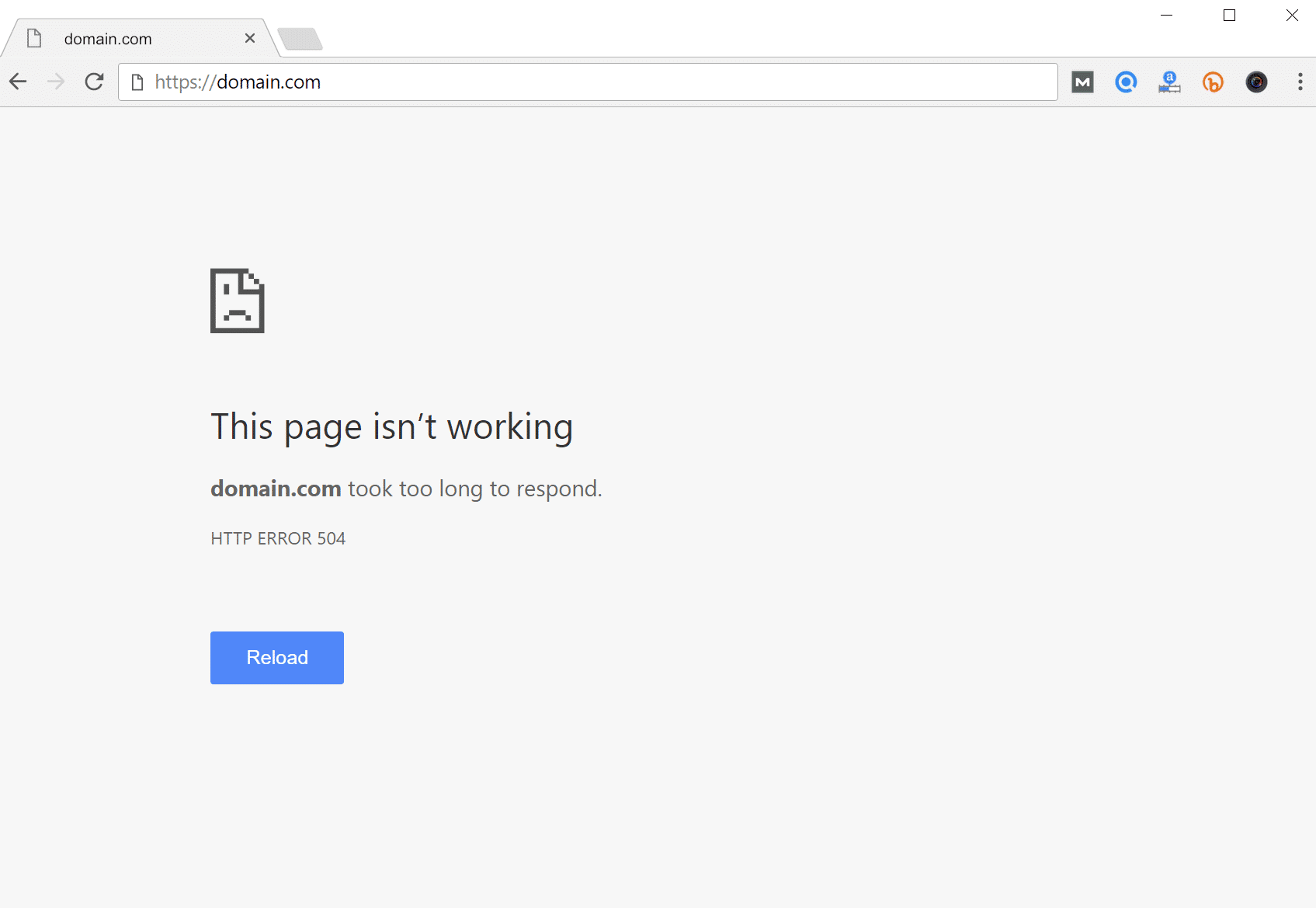
In the past week, as the Cloudflare global network experienced a major outage that took down key parts of the internet—affecting platforms such as X (formerly Twitter), ChatGPT (by OpenAI), Uber, and many others—one thing became painfully clear: our collective faith in cloud-based infrastructure is built on brittle foundations. (Tom’s Guide)
This event provides a timely opportunity to step back and ask: What are we really trusting when we move our systems to “the cloud”? What are the unseen dependencies, the hidden single-points-of-failure, and the risks that seldom make it into executive briefings or technologists’ slide decks?
What Happened with Cloudflare?
The Cloudflare incident unfolded as follows:
- A spike in site error reports began around 6:30 am ET, with the real collapse starting roughly at 8:30 am and stretching toward noon. (Tom’s Guide)
- The company’s status page declared: “We are aware of, and investigating an issue which impacts multiple customers: Widespread 500 errors, Cloudflare Dashboard and API also failing.” (Tom’s Guide)
- Major services using Cloudflare’s network layer (routing, DNS, API gateway, edge content) suffered widespread interruption. Even the outage-monitoring site Downdetector—which itself uses Cloudflare—was knocked offline. (Tom’s Guide)
- The estimated cost of the outage ran into the billions of dollars per hour of disruption. (Tom’s Guide)
- While Cloudflare declared the incident resolved, the fundamental takeaway remained: A failure at one infrastructural provider reverberated across hundreds of services. (Tom’s Guide)
In short: The cloud isn’t a monolith of infinite resilience. It is an arrangement of dependencies—some visible, many not—that can fail quietly until they fail loudly.
Defining the Problem: Dependence vs. Resilience
Let’s define two contrasting states:
- Dependence: Relying on a third-party provider to deliver core infrastructure (networking, routing, DNS, edge services, API gateways). You hand off responsibility, expecting it to just work.
- Resilience: Building systems such that even if a major provider fails, your workflows, data access, and operations continue—perhaps in degraded mode, but still operational.
When we embrace “cloud first” mindsets, dependence tends to dominate. We celebrate convenience—scaling, managed services, zero on-prem hardware—but we underweight failure modes: provider misconfiguration, cascading network failure, subtle logic bugs, or degraded performance across regions. What we saw with Cloudflare is a textbook case of dependence masquerading as resilience: A provider fails, and with it, a large chunk of the internet blinks out.
Cultural Analysis: Why We Overlook the Risk
Several forces cause us to buy into the cloud illusion:
- Marketing momentum: The narrative of “move everything to the cloud” becomes gospel. Migration becomes a badge of modernization rather than a careful balance of trade-offs.
- Complexity outsourcing: Infrastructure complexities are hidden behind managed-service contracts. The cost of failure is abstracted, and when things go wrong, we are shocked. Administrators and the C-Suite demand answers and resolution.
- Network effect complacency: When 90% of your peers trust the same providers, you trust them too, “it must be safe.”
- Operational blind-spots: We measure up-time in terms of service-level agreements (SLAs) and provider up-time percentiles—but we don’t always budget for the intangible risk of “provider incident causes data-flow to freeze” or “API access latched up globally”.
The result: We build for scale, but not for independent survivability. We double down on centralization because it’s efficient until it isn’t.
Philosophical Reflection: Centralization, Trust, and Control
From a deeper perspective, the cloud conversation raises questions of control and sovereignty. When we trust that our data, workflows, and services live somewhere external, we relinquish some measure of independent control. We trust that someone else’s architecture, network, and operational procedures will suit our needs during a crisis.
The recent outage reminds us that control matters—not just in the sense of owning hardware, but in owning pathways: access to data, the ability to redirect or self-recover, the capacity to fail forward rather than collapse.
In a broader sense, this is about responsibility. If you build systems for a community, an enterprise, or a mission, you owe them not just the upside of cloud scale, but the assurance that when the cloud evaporates, something meaningful remains.
Practical Application: What To Do
As an IT executive and strategist (you know this terrain), here’s how to translate the lesson into action:
- Map your dependency surface
- Catalog all third-party providers, cloud platforms, edge services, and DNS/CDN layers you depend on.
- For each, ask: If this provider fails, what is the user-impact window? What fails first?
- Design for graceful degradation
- Instead of “the service is down,” think “what fallback path brings minimal essential function back?”
- Example: If your traffic routing layer fails, can you redirect to a static read-only mirror? Can APIs degrade to cached-mode?
- Layer in independent control
- Own your data exports. Automate regular snapshots. Store them in an independent infrastructure.
- Keep a minimal self-hostable path: even if it’s low-scale, it keeps you visible and resilient.
- Place resilience above convenience (occasionally)
- During architecture reviews: “Does this design give us fallback?” If the answer is “no”, reconsider.
- Accept that redundancy and diversity cost more and may reduce short-term agility—but buy you long-term reliability.
- Plan the incident-response playbook around external failure
- Many incident plans assume your own data center or cloud zone fails. Fewer assume your cloud provider’s core network or edge service fails globally.
- Run drills: “What do we do if Provider A is down for 4 hours, 12 hours, or 24?”
- Communicate the risk honestly
- For your stakeholders: cloud-failure is not a niche edge case—it’s a real risk (as Cloudflare’s outage proved). Put it in the dashboard.
- Use the language of cost (financial, reputation), downtime risk, and strategic loss.
Closing Reflection
The cloud revolution was historically about democratising infrastructure: making scale, performance, and global availability accessible. That remains true. But with convenience came a subtle risk: we outsourced not just operations—but our resilience. The incident with Cloudflare is a reminder that even the giants are fallible.
If we’re serious about building systems—knowledge bases, community platforms, enterprise services—that last, then we must build knowing that failure is inevitable, and yet preparing so we aren’t crippled when it comes.
In your role as an executive, strategist, or sysadmin, this means insisting on backbone, not just surface scale; designing for longevity, not just modernity; building for independence, not just dependency.
Because when the cloud evaporates, the problem isn’t just a service blip—it’s a trust fault line. And the organizations that win will be those that built beyond the crack.